You’ve probably seen this image before — the plane with red dots.
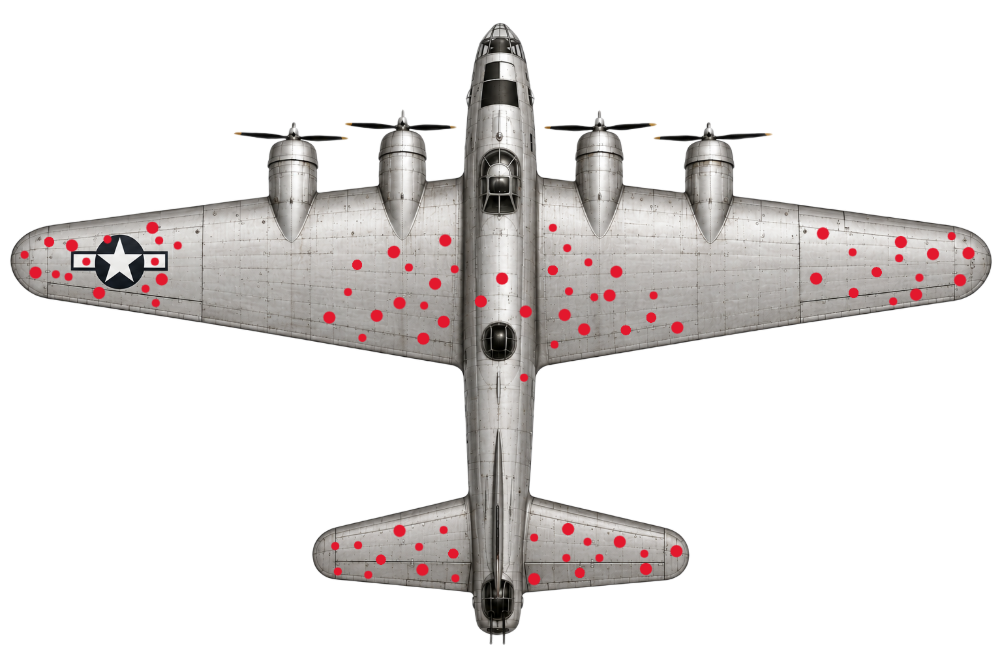
It shows up on social media, in textbooks, and in presentations. It looks like an outline of an airplane covered in red dots. But what does it actually mean?
This is a diagram of a World War II bomber. During the war, the military recorded every bullet hole on each plane that came back from a mission. They combined all that data into a single map — and this image is the result.
Every red dot marks a spot where a bullet or shrapnel hit a plane that successfully returned to base.
Look closer
Notice something about the dots?
The red dots are not evenly spread. The wings, body, and tail are covered in them. But the engines and the cockpit? Almost completely blank.
“The wings get hit the most, so that’s where we should add protection.”
The engines have no dots because planes hit there never came back >.
The blank areas aren’t safe zones. They’re blind spots — the data from those hits was lost along with the planes.
The name for this
Survivorship Bias
When we only look at the things that survived — successful companies, famous people, planes that returned — we get a distorted picture of reality.
The failures disappear from view. And because we can’t see them, we forget they ever existed. That’s exactly what happened with these planes.